May 26 2009

Robot Gardeners

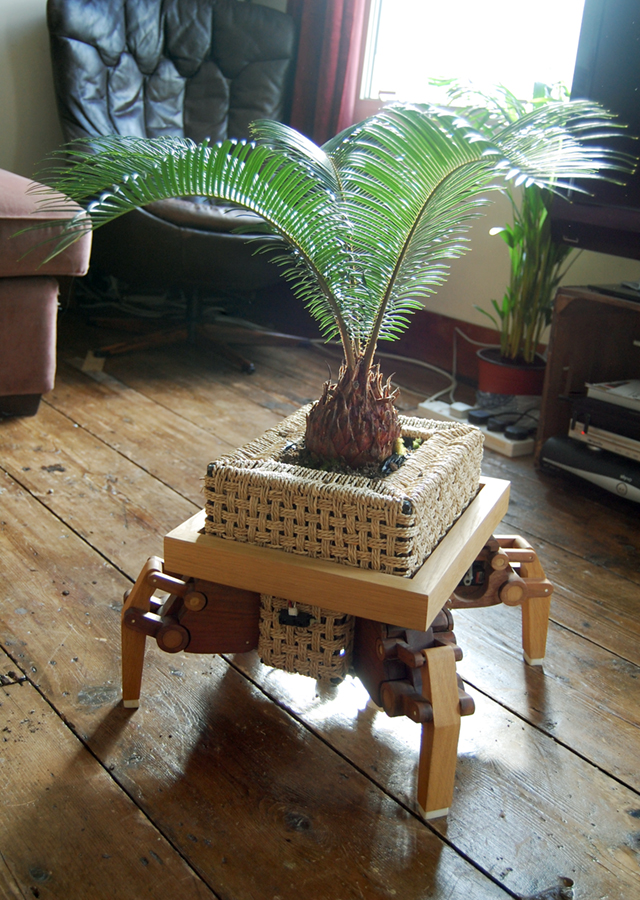
The Play Coalition created Plantbot, a servo powered planter. The idea is that the planter continuously tracks the sun, ensuring that the plant get maximal sunlight.

My initial impression was that this was a really cool idea, but when I started thinking about it, it seems like yet another one of those ideas that are utterly impractical. I mean, do you really want furniture that constantly moves? Well I guess a dog is kind of like that, but it doesn’t immediately back to the same place. In all honesty though, that’s an engineering problem. An accelerometer to detect pickup and not move for some time after being placed back down. I guess the other thing is having it move back to its original position each morning. Well, I guess that’s just a search pattern. So, I guess none of this is that big of a problem.
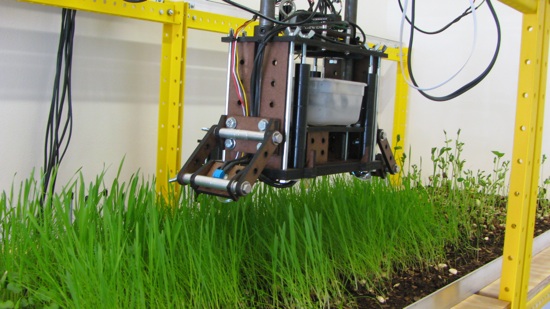
Adafruit links to Peter Sand’s Fast Planting. (Alas, the video is broken.) Fast Planting is a track mounted robot for tending an herb garden. The cursor moves across and grabs interchangeable tool heads to plant, water, and trim the plants. Completely over engineered. ;)


May 26 2009

Diorama Weather Forecast

analogweather

Swiss Miss links to Kurt Riedi and Steffi Gloor’s weather site. Each forecast is presented as a photograph illustrating the qualitative weather for the day. Browse them all.

I really like how endearing each photo is. Something like this would be infinitely better for my dad’s weather station (A Davis Vantage Pro. Highly recommended.), than the horrible UI that WView provides by default


May 25 2009

Mentalgassi

Ahh, Berlin… The city with the best street art environment of any city I’ve been in.

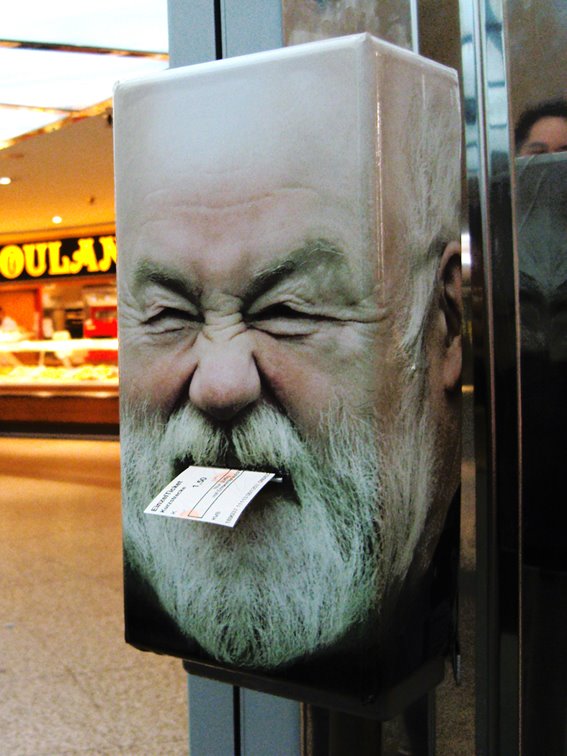
Berlin’s Mentalgassi installs pasteups of wraparound photos of persons’ heads over common items in the urban environment.

I love the playful interaction of the faces with the ticket validators. It’s just clever.

Continue reading


May 25 2009

Forma Urbis Cairo

BLDGBLOG writes about Nina Burleigh’s book about the French in Egypt during Napoleon, Mirage. In it, Burleigh mentions how each neighborhood in Cairo was walled off from each other. Only small gates, sometimes, just a single gate for a neighborhood interconnected the city. A city of cities if you will. Napoleon ordered that the entire city be mapped.

[I]t was deemed so daunting that at first the engineers hoped the order [to map Cairo] would be rescinded” – but, of course, “it was not.” Edme-François Jomard, the cartographer in charge of the project, wrote: “The city is almost entirely composed of very short streets and twisting alleys, with innumerable dead-ends. Each of these sections is closed by a gate, which the inhabitants open when they wish; as a result the interior of Cairo is very difficult to know.” Jomard, Burleigh writes, would spend his time “knocking on gates that hid whole neighborhoods.”

When I read this, I thought of two things. First, it sounds like 18th century Cairo was almost like Harry Potter’s Diagon Alley. Only if you knew where you were going, and knew the password, would the hidden areas be open to you. The other was the Forma Urbis Romae.

The Forma Urbis Romane was an detailed marble map of Rome circa 200 CE. It outlined every street, alley, doorway, and stairwell in the city. Not just public areas, but the internal plans to the buildings as well. Unfortunately, a majority of the map was destroyed and used for lime and other building materials. Today, only about 10% remains.

I’ve always had a soft sport of maps every since I was little. Whether the map was a real location, or a fictional one, a map always filled me with wonder. It was a window to an adventure. With a map, I’m prepared to go.


May 22 2009

Crayons of Mars

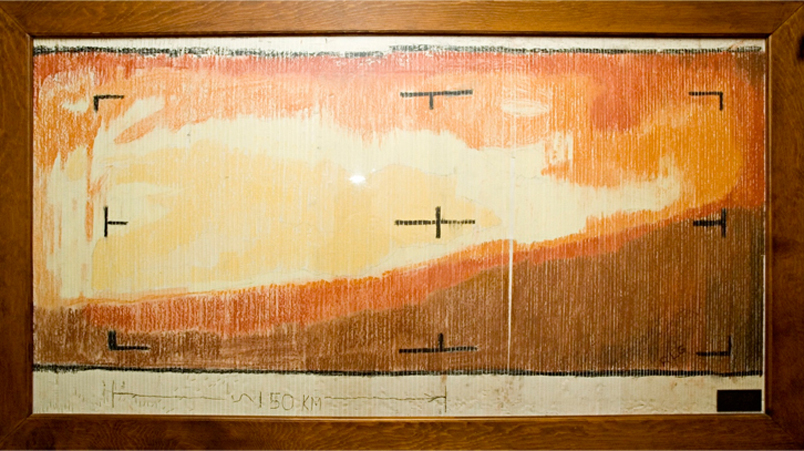
Dan Goods, artist at JPL, recently curated the Data + Art exhibit at the Pasadena Museum of California Art. (Show ran from January to April 2009.) As part of this exhibit is the crayon shaded printout of raw data from the Mariner 4 of the first image from Mars.

I like the very low tech solution to rendering the image, but I do find it a strange when compared to the processed image. Perhaps it’s because of the colors of the crayons used, but the colored image makes the image appear like a landscape. If this was a Viking image, I wouldn’t have thought anything was strange, but Mariner 4 was an orbiter. In the processed image, the planet doesn’t even appear to fill the entire frame.

Continue reading


May 18 2009

Murals of The Mission

The Chron highlights some of the murals of The Mission in San Francisco. Murals are pretty common in The Mission, but this list highlights some of the best.


May 6 2009

God, I Love Festo

Festo, a German robotics company, has unveiled yet another of their mesmerizing biologically inspired creations, AquaPenguin (Not to be confused with AirPenguin.) (Autoplay (bleh!) video after the jump.) You may remember Festo from their robotic jellyfish AirJelly and AquaJelly. (Videos of these also after the jump.)

Festo creates these as part of their Bionic Learning Network. This project models natural animal systems in an effort to develop lightweight, and energy efficient designs for manipulators and locomotion. As a side effect of this research, Festo creates these robots in order to demonstrate the effectiveness of this approach.

Continue reading


May 1 2009

Coming to a Town Near You!

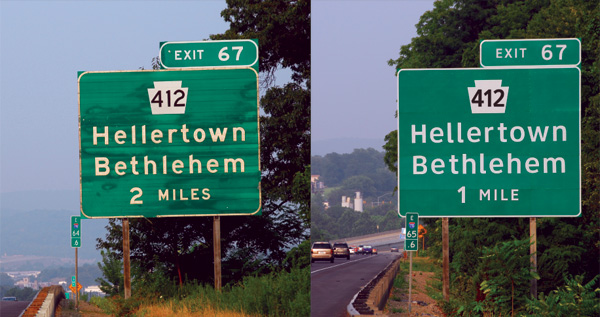
The US Department of Transportation is changing the highway sign font. Out with Highway Gothic, and in with Clearview.

Don’t miss the slideshow that points out the differences between the fonts.